

Insights
Market Insight for Exhibit and Event Hiring
Hiring Sales Leadership
Hiring Sales Leadership is not the same as hiring a top salesperson. The best sales leaders create structure, accountability, and predictable revenue by building teams, developing talent, and establishing repeatable sales processes. They understand when to coach, when to recruit, and when to change direction. This guide explains how to identify sales leaders who can build pipeline, improve performance, and create sustainable growth across the organization.
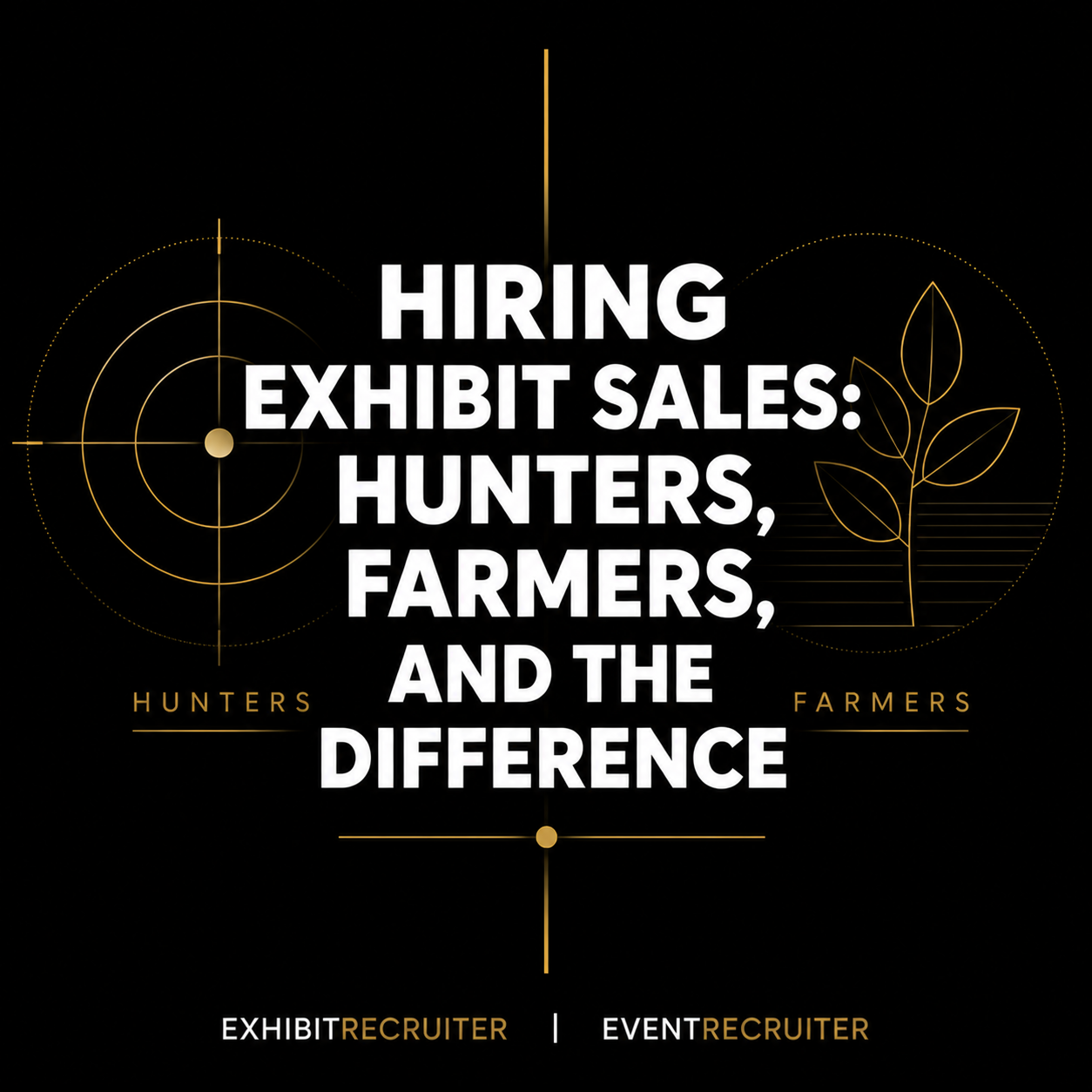
Hiring Exhibit Sales: Hunters, Farmers, and the Difference
Hiring exhibit sales professionals starts with understanding whether you need a hunter or a farmer. Hunters create opportunities, open doors, and bring new clients into the organization. Farmers grow existing relationships, expand accounts, and create long-term revenue. Many companies hire for one and expect the other. This guide explains the difference, how to evaluate each profile, and why aligning the role with the right sales talent is critical to predictable growth.
Hiring Account Leadership
Hiring Account Leadership is one of the most important decisions an agency can make. These leaders sit at the intersection of client relationships, revenue growth, team performance, and business strategy. Learn how to identify the people who can expand accounts, lead teams, navigate complex client organizations, and create sustainable growth for the agency.
Hiring Producers at an Experiential Agency
Producers sit at the center of successful experience marketing programs. They coordinate strategy, creative, production, vendors, logistics, and client stakeholders while maintaining control of budget, timing, and execution. This guide explains what to look for, how to evaluate candidates, and why the right Producer can have an outsized impact on agency performance.
Hiring Project Managers at an Exhibit House
Project Managers sit at the center of every successful exhibit project. They manage timelines, budgets, vendors, internal teams, and client expectations while navigating constant change. This guide explains what to look for, how to evaluate candidates, and why the strongest project managers are often the difference between a profitable project and a costly one.
Exhibit and Event Recruiting. Nothing Else.
Exhibit and event recruiting requires more than recruiting experience. It requires a deep understanding of the roles, companies, career paths, compensation structures, and hiring challenges unique to the industry. From sales and account leadership to project management, design, production, operations, and executive leadership, successful searches depend on industry knowledge and a specialized network. This guide explains why specialization matters and how focused recruiting can improve hiring outcomes across the exhibit and event industry.
Executive Search in the Exhibit and Experiential Industry
Executive search in the exhibit and event industry is about more than filling a leadership position. The right executive can influence culture, performance, profitability, client retention, and the future direction of the organization. Successful searches require industry expertise, access to passive talent, and a clear understanding of what success looks like beyond the job description. This guide explains how to identify, attract, and evaluate executive leaders capable of creating lasting impact.
The Hiring Signal
Most hiring challenges do not start with a lack of candidates. They start with a lack of clarity. Unclear expectations, conflicting priorities, delayed decisions, and misaligned stakeholders create hiring problems long before the search begins. The Hiring Signal is a framework designed to identify those issues early, helping organizations make better hiring decisions, attract stronger talent, and improve hiring outcomes before the first candidate is ever contacted.
Hire Differently
Roles stay open longer than they should. The right candidates don't show up. Most companies assume it's a market problem. It usually isn't.
Slow Hiring Looks LIke Disorganization
Slow hiring is often interpreted as caution. Candidates usually see something else. Delayed decisions, inconsistent communication, changing requirements, and lengthy interview processes signal uncertainty and disorganization. The strongest candidates rarely wait. They move toward organizations that demonstrate clarity, urgency, and confidence. This guide explains why slow hiring costs companies top talent and how to create a hiring process that reflects the organization you want candidates to join.
Top Talent Isn’t Applying
Many organizations assume the best candidates are actively searching for their next opportunity. In reality, most top performers are not applying to jobs at all. They are focused on their current responsibilities, succeeding in their roles, and waiting for the right opportunity to find them. This guide explains why traditional recruiting methods often miss the strongest talent and how organizations can identify, engage, and attract candidates who were never planning to apply.
Companies Are Hiring Wrong
Exhibit and event companies are back in the market. They're just not hiring better.
Hiring is Changing
Hiring is changing because the best candidates are changing. Top performers have more access to information, more opportunities, and higher expectations than ever before. They evaluate employers the same way employers evaluate them. Compensation still matters, but so do leadership, culture, communication, growth opportunities, and the hiring experience itself. This guide explores the forces reshaping hiring and what organizations must do to attract and secure top talent in a more competitive market.